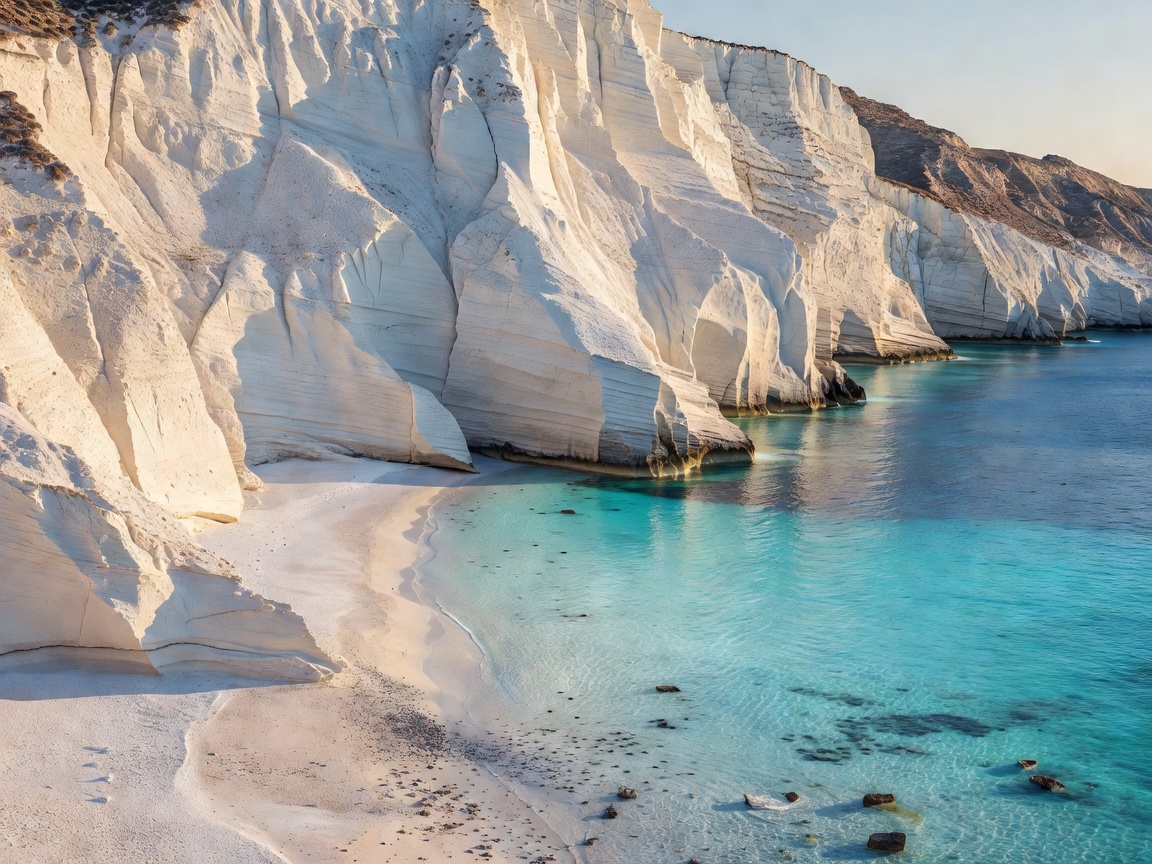
The Volcanic Character of Milos
Milos possesses the most diverse shoreline geology in the entire Mediterranean basin. Due to its position along the Hellenic Volcanic Arc, the island showcases over 70 distinct beaches ranging from stark, bone-white lunar pumice to black obsidian sands and copper-red mineral canyons.
Kleftiko: The Pirate Stronghold
Located on the southwestern tip of Milos, Kleftiko is accessible only by private boat or a demanding 1.5-hour trek across arid serpentine hills. The bay consists of a labyrinth of soaring white sea stacks and submerged tunnels where Corsairs once concealed their galleys from Ottoman patrols.
"Swimming through the illuminated arches of Kleftiko reveals water so exceptionally pure that catamarans appear suspended in mid-air above the seabed."
Poliegos: The Uninhabited Blue Lagoon
Situated just east of Kimolos, Poliegos is the largest uninhabited island in the Aegean Sea. Protected as a critical marine reserve for the endangered Mediterranean monk seal (Monachus monachus), its bays—notably Faros and Kato Mersini—feature electric-cyan shallows resting against towering red and white rhyolite bluffs.
Recommended Maritime Protocol
- Wind Assessment: Monitor the Meltemi winds (predominantly North/Northwest) which peak in July and August. Anchor on southern sheltered bays during high wind warnings.
- Syrmata Architecture: Explore the traditional boathouses of Klima and Firopotamos, featuring vibrantly painted wooden doors on water-level boat garages.
- Snorkeling & Free-Diving: The volcanic underwater caverns of Papafragas provide remarkable visibility often exceeding 35 meters.